Family or people that are affected by the following list below might ask more questions about what they read online about ingredients and their effects such as honeybush tea, german chamomile, cape wild mint(horse mint), buchu, passion flower , hibiscus sabdariffa or sour tea, pelargonium, or sceletium or kanna individually:
• Autism Spectrum Disorder (ASD) • Attention-Deficit/Hyperactivity Disorder (ADHD) • Asperger's Syndrome (now part of ASD) • Down Syndrome • Dyslexia • Dyscalculia • Dysgraphia • Tourette Syndrome • Sensory Processing Disorder (SPD) • Dyspraxia (Developmental Coordination Disorder) • Obsessive-Compulsive Disorder (OCD) • Nonverbal Learning Disorder (NVLD) • Intellectual Disability (ID) • Social (Pragmatic) Communication Disorder • Pervasive Developmental Disorder-Not Otherwise Specified (PDD-NOS, now part of ASD) • Fragile X Syndrome • Williams Syndrome • Epilepsy (associated with neurodiversity in some cases) • Traumatic Brain Injury (TBI)-related Neurodiversity • Fetal Alcohol Spectrum Disorder (FASD) or anything inbetween.
Here we explore how some of these ingredients could build on each other collectively, and not just with their isolated impact.
(Read this blog here and further readings on the blog post about individual ingredients.)
Beyond Single-Target Thinking: A Systems View of Brain Health Through Plant Chemistry
For a long time, the brain has been explained in relatively reactive terms.
Serotonin and depression.
Dopamine and motivation.
GABA and calm.
These associations are not wrong—but they may be incomplete.
A growing body of research suggests that brain function is not governed by isolated pathways, but by interacting systems—where neurochemistry, immune signaling, and even the microbiome influence one another in continuous feedback loops.
In this emerging view, three domains appear repeatedly:
Neurotransmitter systems (such as serotonin and GABA)
Inflammatory signaling (including cytokines like IL-6 and TNF-α)
The microbiome–gut–brain axis
Rather than operating independently, these systems appear to overlap in ways that are only beginning to be understood.
This raises a different kind of question:
What if meaningful changes in brain function don’t come from targeting a single pathway—but from gently influencing several at once?
🌿 A Botanical Lens on Complex Systems
Traditional plant use offers an interesting perspective here.
Unlike single-compound pharmaceuticals, many botanicals contain diverse chemical profiles, allowing them to interact with multiple biological pathways simultaneously.
A small group of plants unfolds in some particularly interesting illustrations:
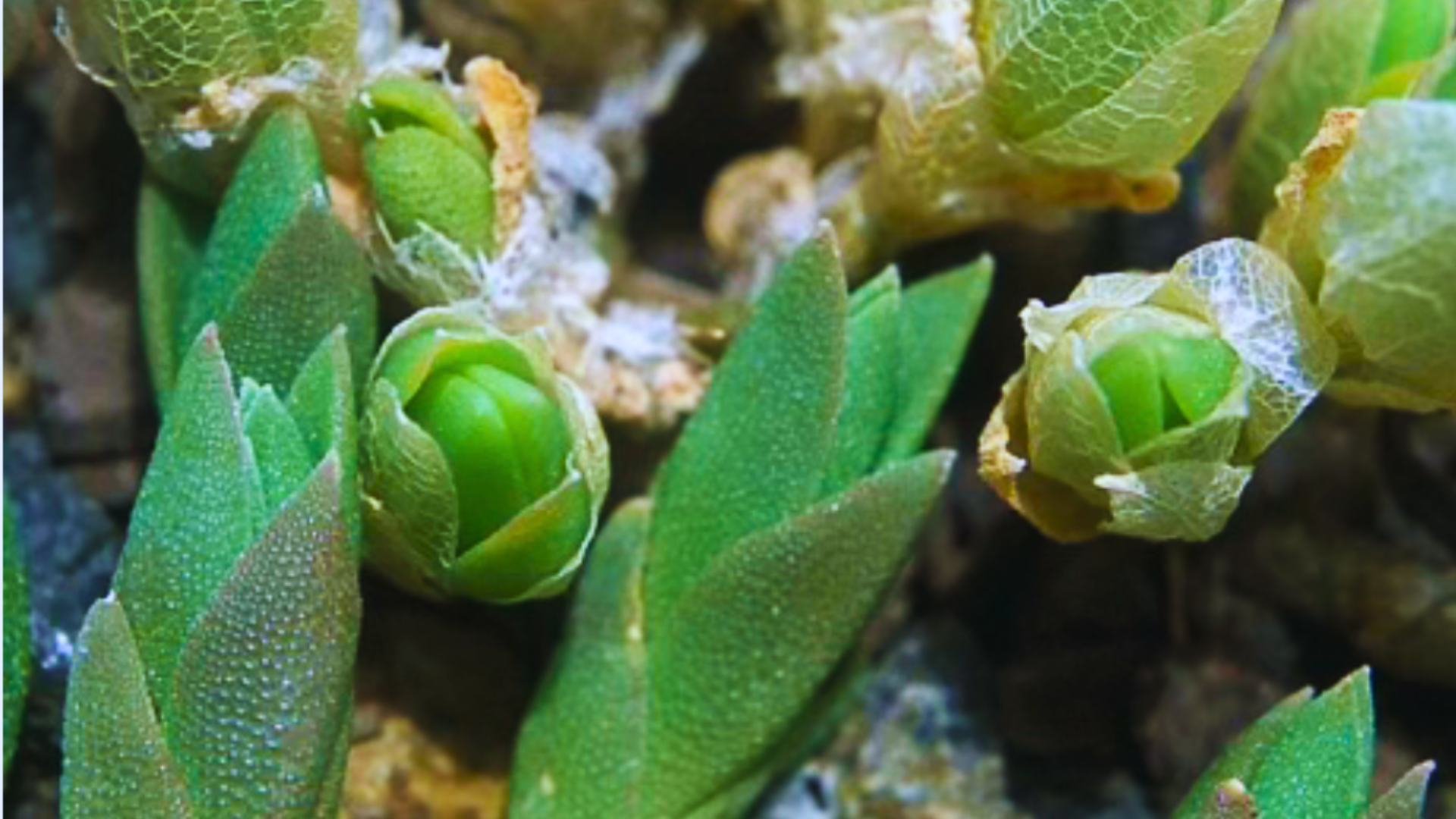
Sceletium tortuosum
Matricaria chamomilla
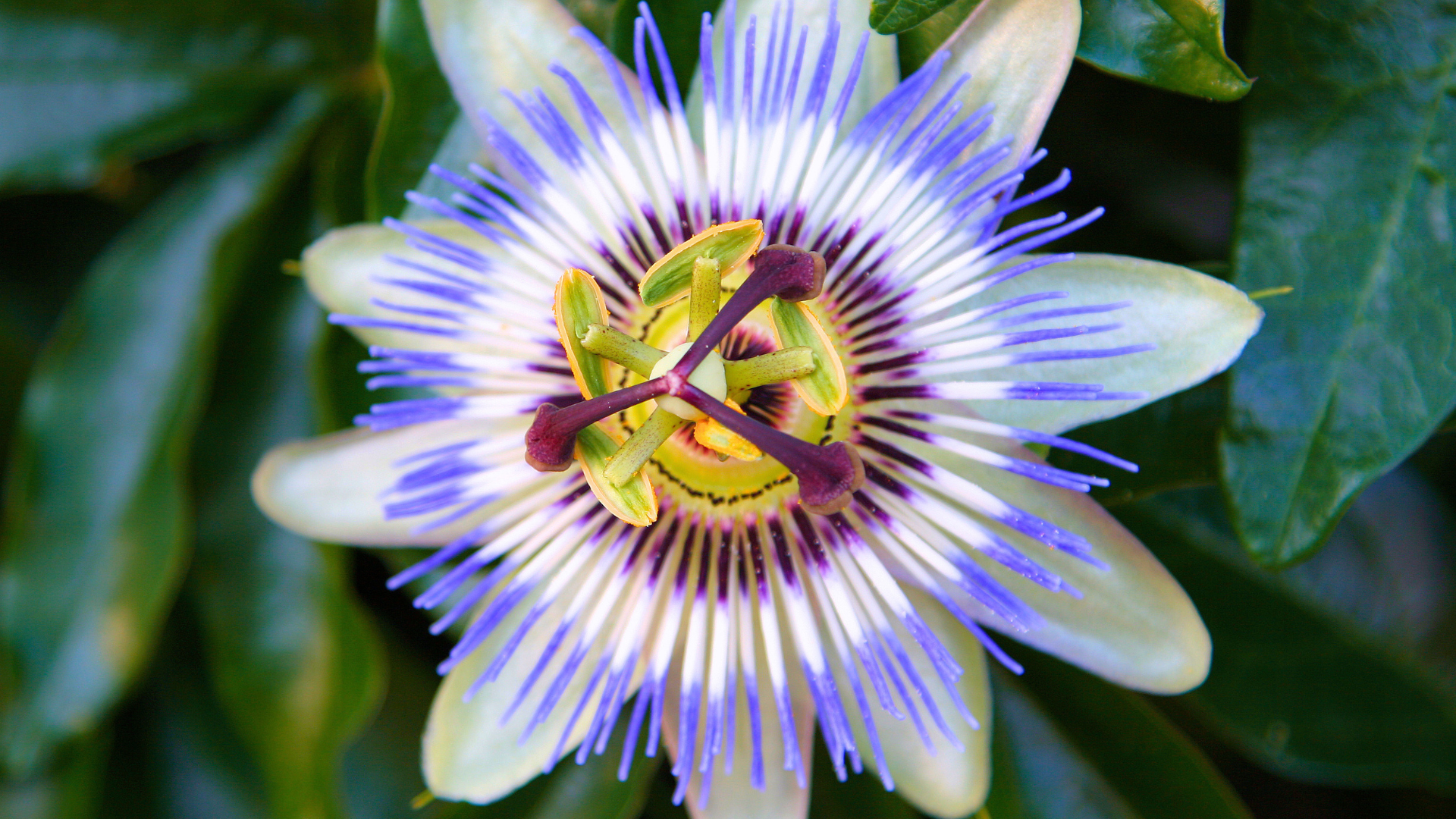
Passiflora incarnata
Cyclopia spp.
Hibiscus sabdariffa
Individually, each has been studied for different effects.
Taken together, they begin to suggest something more layered. Neurotransmitters: Not Just On or Off
Research into Sceletium tortuosum has identified several mechanisms of interest, including serotonin reuptake inhibition and phosphodiesterase-4 (PDE4) inhibition—both of which are associated with mood and cognitive processes (Harvey et al., 2011; Smith et al., 2025).
At the same time, plants such as Matricaria chamomilla and Passiflora incarnata appear to interact with GABAergic systems. Apigenin, a compound found in chamomile, binds to GABA-A receptors, while passionflower has been associated with increased GABA availability (Srivastava et al., 2010; Akhondzadeh et al., 2001).
What becomes interesting is not just these individual effects, but their potential interaction.
Some emerging findings suggest that Sceletium may influence GABA activity in a region-specific manner, potentially in ways that differ from classical GABAergic herbs.
This raises an open question: could certain combinations support a state of calm focus—rather than simple stimulation or sedation?
At present, this remains largely unexplored in direct studies.
Inflammation: The Quiet Contributor
Alongside neurotransmitters, inflammation is increasingly recognized as a key factor in mental and cognitive health.
Elevated inflammatory markers—such as IL-6 and TNF-α—have been associated with mood disorders and cognitive fatigue (Miller & Raison, 2016).
Polyphenol-rich plants like Cyclopia spp. and Hibiscus sabdariffa have been studied for their antioxidant and anti-inflammatory properties.
Preclinical work suggests these plants may: reduce oxidative stress
modulate inflammatory signaling pathways
(Johnson et al., 2020; McKay et al., 2010)
While often discussed in metabolic or cardiovascular contexts, these effects may also be relevant to brain function.
🦠 The Gut–Brain Axis: An Expanding Frontier
A third layer of complexity lies in the microbiome.
Research into the microbiome–gut–brain axis suggests that gut bacteria can influence:
neurotransmitter production
immune signaling
stress responses
(Cryan et al., 2019)
Polyphenols—abundant in plants like honeybush and hibiscus—are known to interact with gut microbes, sometimes acting as substrates for the production of bioactive metabolites.
This introduces a subtle but important possibility:
Some plant effects on the brain may be mediated not directly, but through the microbiome.
Toward a Systems Perspective
Taken together, these observations point toward a broader idea.
Rather than viewing each pathway in isolation, it may be more useful to think in terms of overlapping systems:
Neurotransmitter modulation
Inflammatory regulation
Microbiome interaction
A combination of botanicals—each influencing a different domain—could, in theory, act as a multi-layered model for studying integrated brain function.
To date, direct research on such combinations remains limited.
But the convergence of mechanisms suggests this may be an area worth exploring more deliberately.
An Open Question
This is not a conclusion.
It is, perhaps, a reframing:
If brain health is shaped by interacting systems, could equally complex interventions—such as multi-compound botanical models—offer new ways of studying it?
For now, the evidence is still emerging.
But the questions themselves may be pointing in a useful direction.
Further Reading
Harvey, A.L. et al. (2011). The pharmacology of Sceletium tortuosum
Srivastava, J.K. et al. (2010). Chamomile: A herbal medicine of the past with bright future
Akhondzadeh, S. et al. (2001). Passionflower in the treatment of anxiety
Miller, A.H. & Raison, C.L. (2016). The role of inflammation in depression
Cryan, J.F. et al. (2019). The microbiota–gut–brain axis